
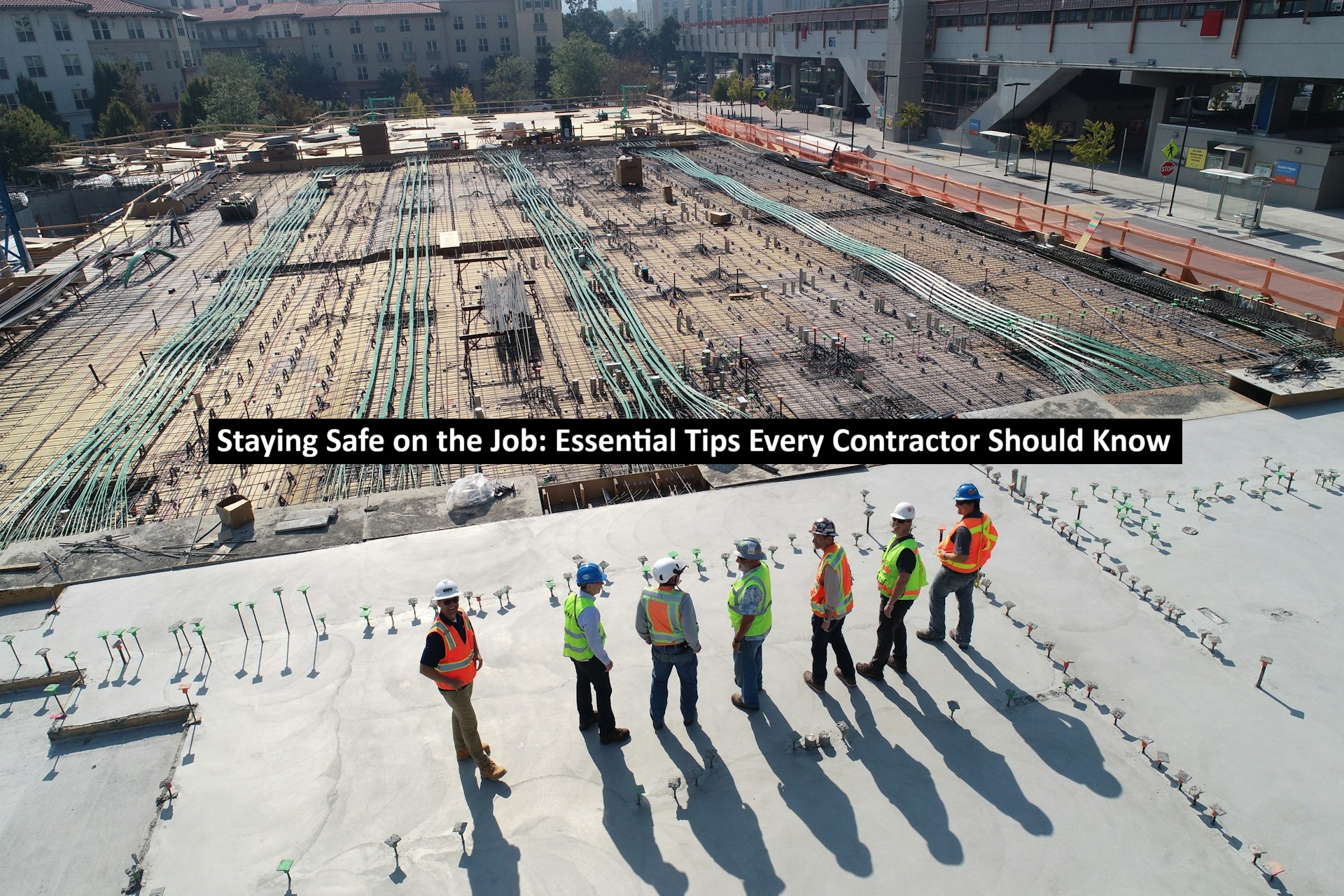
Staying Safe on the Job: Essential Tips Every Contractor Should Know
Construction work is honest work.
It’s physical. It’s demanding. And it carries real risk.
Most contractors don’t think of themselves as reckless. They show up early. They know their tools. They’ve done the job hundreds of times. But familiarity can be deceptive. Many job-site injuries happen not because someone didn’t know better, but because they got comfortable.
Safety isn’t about fear. It’s about working safely.
Start With Situational Awareness
Every job site is different.
Weather changes. Traffic patterns shift. Equipment moves. One overlooked detail can turn a normal workday into a dangerous one.
Before starting work, take a few minutes to scan the area. Look for uneven surfaces, limited visibility, nearby traffic, or overlapping crews. This simple habit reduces risk more than most people realize.
According to the Occupational Safety and Health Administration (OSHA), situational awareness is one of the most effective ways to prevent job-site incidents before they occur.
Stay situationally aware by:
- Walking the site before unloading equipment
- Identifying traffic flow and potential blind spots
- Noting surface conditions
- Watching how pedestrians and drivers naturally move through the area
- Rechecking conditions after weather changes or crew shifts
A pause at the start saves problems later.
Read: Why Cloud-Based Clinic Management Solutions Are the Future of OPD Billing
Visibility Isn’t Optional
High-visibility gear isn’t about checking a box. It’s about being seen when it matters most.
Picture a driver glancing up for half a second. Or a piece of equipment turning where it always turns. That moment is where visibility earns its keep. Bright gear buys time. Time to reach, slow down, or stop altogether.
Whether you’re working near moving vehicles, operating equipment, or walking between active zones, being visible changes how people move around you. Drivers hesitate sooner. Coworkers adjust their paths. Equipment operators spot motion instead of guessing where someone might be.
The Centers for Disease Control and Prevention (CDC) highlights visibility as a key factor in reducing struck-by incidents, which remain one of the most common causes of construction injuries. In real terms, that means fewer close calls. Fewer sudden brakes. Fewer “I didn’t see you” moments.
You can ensure your team stays visible by:
- Wearing high-visibility vests or jackets
- Using reflective gear during low-light conditions
- Keeping work zones clearly marked
- Making visibility checks part of daily setup routines
It’s easy to underestimate how quickly conditions change on an active site. Shadows shift. Sun glare sets in. Headlights appear earlier than expected. Visibility that felt fine in the morning can fade by mid-afternoon. Adjusting gear and markings as the day goes on isn’t overkill. It’s awareness in motion.
Treat Traffic Control Like a System
Traffic doesn’t improvise. Neither should contractors.
Cones, signs, barriers, and spotters all work together. When one element is missing, the entire system weakens. Temporary traffic control should guide behavior, not confuse it.
If drivers hesitate, brake suddenly, or look unsure, something needs adjusting.
Clarity equals safety.
Don’t Rush Equipment Setup
Time pressure causes shortcuts. Shortcuts cause injuries.
Rushed setup leads to unstable equipment, improper alignment, and overlooked safety checks. Taking a few extra minutes to set things correctly protects both the operator and everyone nearby.
Learn From Near Misses
Not every mistake ends in an injury.
Sometimes, it’s a frightening moment where everyone exhales and moves on.
Those moments matter.
Near misses are warnings. Quiet ones. They show you where the job almost went sideways without the cost of finding out the hard way. Ignoring them doesn’t make the work safer. It just delays the lesson.
Talk about them. Right away. What happened? What changed? What would we do differently next time? No blame. No speeches. Just clarity.
Because if something nearly went wrong once, the conditions are already there.
All it needs is timing.
Communicate Like It Matters
Most job-site accidents involve more than one person.
That means communication matters. Clear hand signals. Verbal confirmations. Making eye contact before moving equipment. These aren’t formalities. They’re safeguards.
If something feels unclear, stop and ask. If conditions change, speak up.
Silence creates risk. Communication reduces it.
Respect Fatigue
Long days add up. Fatigue slows reaction time, dulls judgment, and increases the likelihood of mistakes. According to the CDC, fatigue is a factor in one out of every eight workplace injuries.
Ignoring fatigue doesn’t make you tough. It makes you vulnerable.
Reduce fatigue by:
- Scheduling regular breaks, even during busy days
- Rotating physically demanding tasks among crew members
- Staying hydrated throughout the workday
- Avoiding extended shifts without adequate rest
- Paying attention to early signs of exhaustion, not just injuries
Make Safety Part of the Routine
The safest crews don’t treat safety as a meeting topic.
They treat it as muscle memory.
That means consistent habits. Regular checks. The same setup process every time. Safety becomes automatic when it’s built into daily operations, not layered on top.
Over time, this consistency protects workers and improves efficiency. Fewer disruptions. Fewer injuries. Fewer lost days.
Smart Tools Support Safer Work
As operations grow, relying on improvised setups becomes harder to sustain.
Many contractors eventually look for tools and equipment that support clearer workflows, safer traffic control, and more consistent results. That includes investing in reliable solutions like a line striping machine that helps maintain visibility, precision, and control on active job sites.