
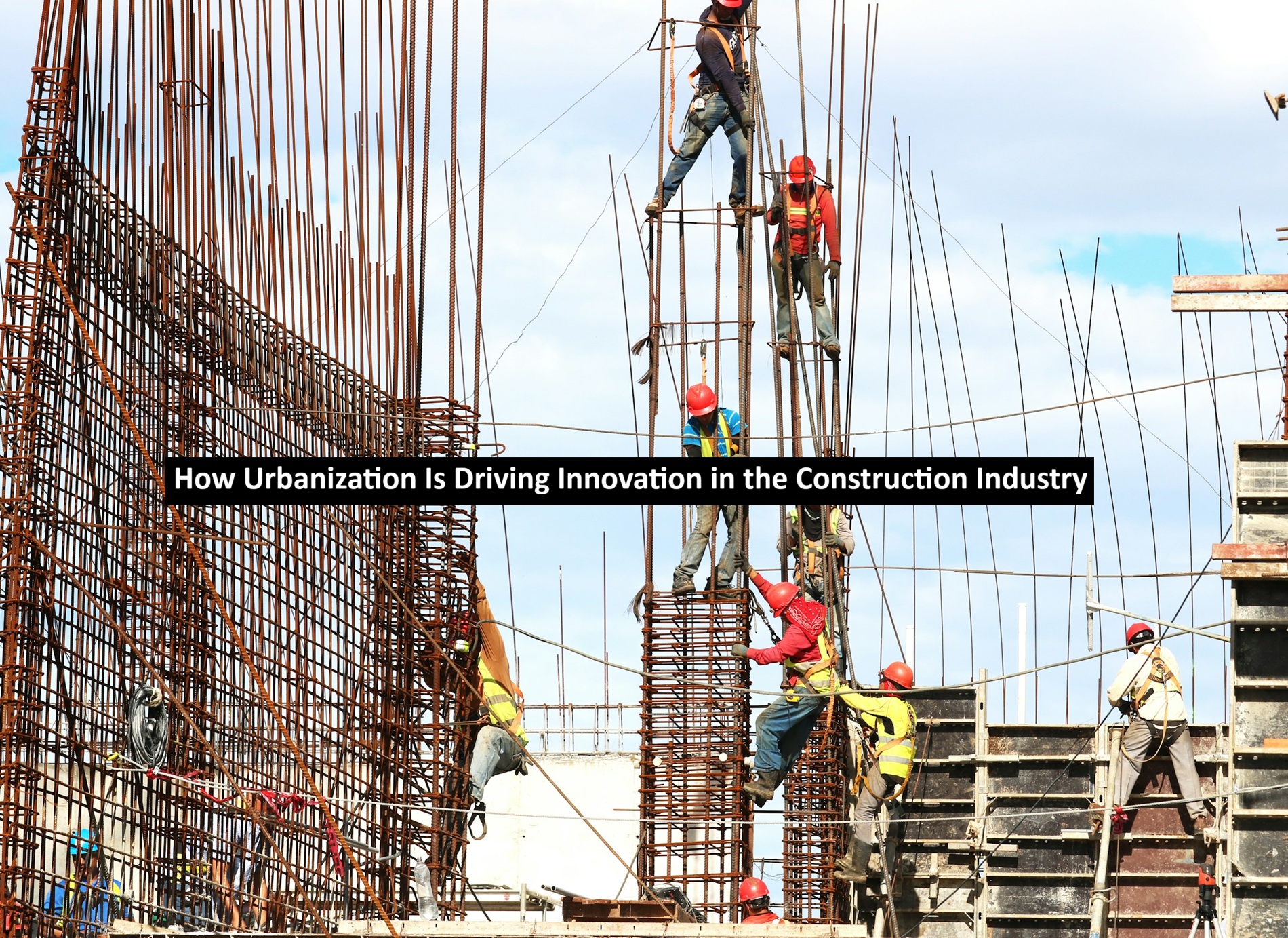
How Urbanization Is Driving Innovation in the Construction Industry
Now, as ever, the process of urbanisation represents the dominant influence on economies and the construction of our environment. With our population increasingly flocking to cities in search of career opportunities, better infrastructure, and higher living standards, demand for housing, commercial properties, and public works has never been greater. What this growth demands of our industry is not only greater volume of construction, but smarter, faster, more sustainable methods of building.
Cities demand not just more places to live and work, but better, more connected infrastructure and smart public spaces for generations to come. Architects, builders and engineers, as well as technology developers, must constantly strive to meet these changing demands in a rapidly urbanizing world – even when grappling with land constraints, skills gaps, soaring material prices and environmental imperatives.
With a robust market outlook to back them up, industry players are seeking new efficiencies in an increasingly vital sector. Indeed, according to Expert Market Research, the worldwide construction market posted USD14.45 trillion in 2025 and is expected to grow at an annual compound growth rate of roughly 6.50% in the 2026-2035 period, to reachUSD27.12 trillion by 2035.
“We shape our buildings; thereafter they shape us.” Winston Churchill
Urbanization Is Reshaping Construction Priorities
Urbanization has several reasons to explain for, but this process has taken momentum over the years and every single year thousands and thousands of people migrate to cities thereby demanding new infrastructure and amenities to accommodate this influx and maintain quality of living.
There is huge demand for homes, schools, hospitals, office buildings, modes of transport, power grids and all other necessities and as such old methods of constructions may no longer be cost effective and quick in this competitive age and time.
With increased rate of urbanization construction industry is no longer about building more things but building smarter things and this means that new projects and developers are more concentrated towards using land to the fullest potential by building vertically, energy efficient, creating ecofriendly green buildings, providing modern infrastructure, metro rail, and airports that can help cater the needs of growing populations for the long time. It has given a major boost to modern, smart and quick building techniques and processes.
Read: Balancing Family, Studies and Self Care in Nursing School
Key Factors Accelerating Construction Innovation
Several urban trends are encouraging construction companies to adopt modern technologies and more efficient building practices.
Some of the major drivers include:
- Rapid population growth in metropolitan areas.
- Rising demand for affordable and sustainable housing.
- Expansion of smart city initiatives worldwide.
- Government investment in public infrastructure projects.
- Increasing focus on energy-efficient and environmentally responsible buildings.
- Growing need to optimise limited urban land resources.
These factors have made innovation an essential part of the construction industry’s future rather than an optional competitive advantage.
Technology Is Revolutionising Modern Construction
Technology has become one of the primary drivers of change within the construction sector, with digitisation enhancing almost all aspects of a construction project, from the initial design stage, through to on-site execution and even post-project maintenance. These technologies enable the delivery of faster, more accurate, more efficient projects that produce less waste and safer work environments. The rise of Building Information Modelling (BIM) is arguably one of the biggest and most important shifts seen in modern construction.
Unlike traditional plans, BIM generates comprehensive 3D models of buildings, giving project designers, engineers and construction workers a detailed visual guide that can be used to plan, track, share information, avoid design clash issues before a job gets started, and make informed decisions throughout the project lifespan.
Another significant development is the increasing prevalence of drones, data analytics and artificial intelligence in the sector. The use of drone technology has enabled land surveys to become more comprehensive, it also allows construction sites to be monitored more regularly, and inspections can be conducted efficiently from a safe distance, while AI has the potential to optimise construction schedules, predict where maintenance is likely to be required, and identify where resources will be needed.
Innovations Transforming Construction Sites
Today’s construction projects increasingly rely on advanced technologies that enhance productivity and reduce operational challenges.
Some of the most notable innovations include:
- Building Information Modelling (BIM) for digital project planning.
- Drone technology for surveying and site monitoring.
- Artificial intelligence for project scheduling and predictive analysis.
- Robotics to automate repetitive construction tasks.
- 3D printing for selected structural components.
- Prefabrication and modular construction techniques.
The technology also enables construction businesses to lower material waste, reduce the likelihood of injury to workers, shorten project delivery times, and offer more robust infrastructure that addresses the requirements of growing urban centres.
“The future of construction is not about building more; it is about building smarter.”
Building Sustainable Cities Through Smarter Construction
As city populations soar, the construction sector is making sustainability a top priority. Cities devour enormous volumes of natural resources and power and developing the new urban centres requires sustainable approaches to design, construction and resource use. Today’s new buildings are being designed with lower environmental impact in mind, but also a much higher quality of life in mind.
Green buildings are becoming commonplace in this regard, and developers are implementing a variety of strategies: new energy-efficient lights, renewables, water recycling and sustainable materials are becoming increasingly standard in residential and commercial builds – not only decreasing CO2 levels but cutting long-term running costs and providing a healthier space to live or work.
Beyond individual buildings, planners are integrating sustainable strategies, building new neighbourhoods which pair living spaces with easy access to public transit, green spaces, bicycle routes, and efficient waste recycling – creating a sustainable, liable, interconnected and less car-dependant city.
Sustainable Practices Transforming Urban Development
Several innovations are supporting the transition towards greener construction.
Some of the most impactful practices include:
- Using recycled and low-carbon construction materials.
- Installing energy-efficient lighting and HVAC systems.
- Integrating solar panels and renewable energy solutions.
- Designing water-efficient buildings with rainwater harvesting systems.
- Expanding green roofs and vertical gardens.
- Adopting modular and prefabricated construction methods to reduce waste.
All these efforts show the viability of moving forward with sustainability together with economic progress, providing urban areas with a way to grow and decrease their impact on the environment.
The Future of Urban Construction
The rise in urbanization has also fostered the progress of smart cities, in which digital infrastructure and physical structures operate in conjunction, resulting in increased efficiency and an enhanced quality of life for residents. Contractors are partnering more with technology developers, urban planners and governments to develop interconnected cities that are adaptable to future issues. By integrating intelligent transportation systems, traffic controls, digital utilities and smart public services into the fabric of the city, smart infrastructure construction requires construction companies to implement modern engineering solutions and building materials that can support integrated technology for decades to come.
Furthermore, construction practices involving off-site methods (or prefabs), like modular buildings, continue to spread. With this method, most building’s structures and assemblies are fabricated in environments conducive to tight quality controls and manufacturing outside the constraints of a construction site. It provides a significant time savings for construction sites, minimizes materials waste, and minimizes disruptions within the bustling confines of the city-all features the sector is increasingly searching for in the face of labour shortages and ever-tightening timelines. Despite the innovations within the industry, it continues to encounter several significant challenges.
The industry will face ongoing trials if contractors and firms do not adapt and work together, along with the integration of new technology and development efforts into the workforce. AI, robotics, digital twins and revolutionary materials, for example, are set to dramatically transform the construction market sector’s design process, upkeep and production in the coming decades. Predictive analyses could enable the planning of successful projects with relative ease, autonomous machinery might boost efficiency on construction sites, and future buildings may incorporate materials capable of self-assessment. Tomorrow’s cities will be defined not by the number of their buildings, but by the intelligent design, construction, and interconnectedness of those buildings.